Guildford High Street house removals local parking tips
Posted on 27/07/2026
Moving on or near Guildford High Street can feel like a small logistical puzzle with a very real deadline. The street is busy, parking can be tight, and one badly placed van can slow the whole day down. If you are planning a home move in the centre of Guildford, the smartest thing you can do is treat parking as part of the removal plan, not an afterthought. That is really the difference between a smooth move and a stressful one.
This guide gives you practical, local-first advice on Guildford High Street house removals local parking tips: how to think about access, where problems usually happen, what to check before moving day, and how to avoid the classic mistakes that cause delays. It is written for people moving flats, terraces, maisonettes, family homes, or short-notice properties in and around the High Street. A bit of preparation goes a long way. Truth be told, it saves a lot of swearing too.
Why Guildford High Street house removals local parking tips Matters
Parking is not just a convenience issue on Guildford High Street. It affects timing, labour, safety, and how much energy everyone has by the end of the move. A van that cannot stop close enough to the entrance means more carrying, more trips, and more chances for damage. On a narrow, busy street, that quickly becomes expensive in effort even if no money changes hands.
For house removals, the parking question matters because removal teams need three things at the same time: space, access, and a predictable loading plan. If one of those disappears, the whole job gets slower. That is especially true in town-centre locations where footfall, delivery traffic, and short-stay parking all compete for the same space.
There is also the human side. If you are moving with children, pets, older relatives, or awkward furniture, the last thing you want is a long carry from a distant bay. In our experience, the hardest part of a central Guildford move is rarely the lifting itself. It is the micro-delays: waiting for a space, re-parking, finding a kerb that does not block traffic, then doing it all again. Small things, but they add up fast.
Expert summary: on Guildford High Street, the best removals are usually the ones where parking has been planned as carefully as packing. If the van can stand where it should, everything else becomes easier.
How Guildford High Street house removals local parking tips Works
At a practical level, local parking planning for a High Street move means matching your removal schedule to the space available around the property. That might involve a timed arrival, a short walk from a legal parking spot, a permit arrangement, or a second vehicle transfer if access is awkward. The exact setup depends on the property, the road layout, and the time of day.
Most moves near busy town-centre streets follow the same basic pattern:
- Assess the property frontage and nearby parking conditions.
- Decide whether a van can stop close enough for safe loading.
- Check if any restrictions apply at the expected move time.
- Plan where the van will wait if the entrance is temporarily blocked.
- Build the loading order around the parking position, not the other way around.
That last point is easy to miss. If the furniture is packed and ready but the van is parked awkwardly, you end up carrying heavy items in a longer line than necessary. A sofa, wardrobe, or piano is much easier to move when the route is direct and the vehicle is aligned sensibly with the entrance. For bigger or more fragile items, a good plan often works best alongside specialist support such as furniture removals in Surrey or even piano removals if the load is particularly delicate.
If you are unsure how a move should be structured, the broader removal services overview is a useful place to understand how the different moving parts fit together.
Key Benefits and Practical Advantages
Good parking planning is one of those things people only fully appreciate after a move goes well. Then it feels obvious. Before that, it can seem like admin. But the practical upside is real.
- Faster loading and unloading because the team spends less time walking between the property and the van.
- Lower risk of damage since heavy items are carried over shorter, cleaner routes.
- Less disruption to neighbours and passers-by on a busy street where space is shared.
- Better time control if the van can arrive, load, and depart without repeated repositioning.
- Less stress for you because the move feels organised instead of improvised.
There is another subtle benefit: parking discipline helps you think more clearly about the rest of the day. Once the access plan is set, packing priorities become simpler. The things that need to come out first are the things that should be easiest to reach and quickest to load. That kind of clarity can make even a hectic morning feel manageable.
If your move is time-sensitive, it can also be worth looking at same-day removals in Surrey, especially where you need speed and a tightly coordinated arrival window.
Who This Is For and When It Makes Sense
This guidance is useful for anyone moving from a property where access is not straightforward. Guildford High Street and the surrounding centre can be challenging if you have a narrow frontage, shared access, limited kerb space, or a property above shops. It is also relevant if you are moving at a busy time of day, when parking turnover is unpredictable.
You will find this especially helpful if you are:
- moving from a flat or maisonette above a commercial unit;
- leaving a terraced house with limited outside space;
- moving into a property where neighbours already use the nearest bays;
- working to a fixed handover time and cannot afford delays;
- planning a move with bulky furniture, boxes, or fragile items;
- trying to coordinate a small team, a rental exit, or a last-minute change of plan.
It also makes sense if you are managing a move on your own and booking a vehicle through a man and van service in Surrey. Smaller vehicles can be easier to position, but they still need legal and sensible parking. Smaller does not mean magically simple. If only.
For people moving into or out of a flat, the details in flat removals guidance can be especially relevant because shared entrances and tighter access often shape the whole move.
Step-by-Step Guidance
Here is a practical way to approach a High Street move without getting caught out by parking issues.
1. Walk the route before moving day
If possible, visit the property at the same time of day you expect the van to arrive. Look at the kerb, nearby bays, turning space, height restrictions if any, and how long it takes to walk from the nearest realistic stopping point. You do not need a tape measure for everything, but you do need a sensible eye for distance.
2. Decide where the van will stop
Choose the best legal stopping point first, then plan the loading route from there. If the closest space is too small or awkward, a slightly further bay with a clean carry route may be the better option. It is better to walk a few extra metres than to block traffic or improvise under pressure.
3. Match the van size to the street conditions
On a constrained street, a more compact vehicle can sometimes reduce the amount of repositioning needed. In other cases, a larger vehicle means fewer trips overall. The right choice depends on whether your priority is manoeuvrability or total capacity. For some moves, a removal van is the practical middle ground.
4. Pack by loading order, not just by room
Think about what should go on the van first. Heavy, sturdy items go in early. Fragile or frequently needed items stay accessible. A good packing plan is always tied to the parking plan, because the easiest items to load are not always the easiest items to carry from a distant bay.
5. Keep a fallback option ready
Even the best plan can shift. Another vehicle may take the space, a delivery truck may block access, or a neighbour may need temporary access to a garage. Have a backup bay, a second arrival window, or a short waiting plan in place. That little bit of flexibility can save the day.
6. Re-check on the morning
Parking conditions change. A bay may be occupied, roadworks may appear, or the street may be busier than you expected. A quick check before the van arrives helps you adjust before the loading crew is standing around. Nobody likes that awkward pause where everyone is pretending it is fine. It usually is not.
Expert Tips for Better Results
A few local habits make a big difference on busy streets like Guildford High Street.
- Keep the front entrance clear so boxes can move straight in and out without cluttering the pavement.
- Use colour-coded labels for boxes if the carry route is long; it makes room placement quicker at the other end.
- Reserve the easiest items for first load or last load depending on where the van is parked. That is a small trick, but a very useful one.
- Protect high-contact items with blankets or wraps before they ever leave the property. Shorter carries reduce risk, but not enough to skip protection.
- Coordinate with neighbours politely if access is shared. A friendly heads-up can prevent misunderstandings on the morning itself.
- Choose quieter time windows where possible rather than assuming midday is fine. On a High Street, midday can be exactly when everything feels busiest.
If you are moving a workplace or a mixed-use property, the same principles apply, though the timings can be tighter. A related office removals approach can help with structured loading and tidier transitions.
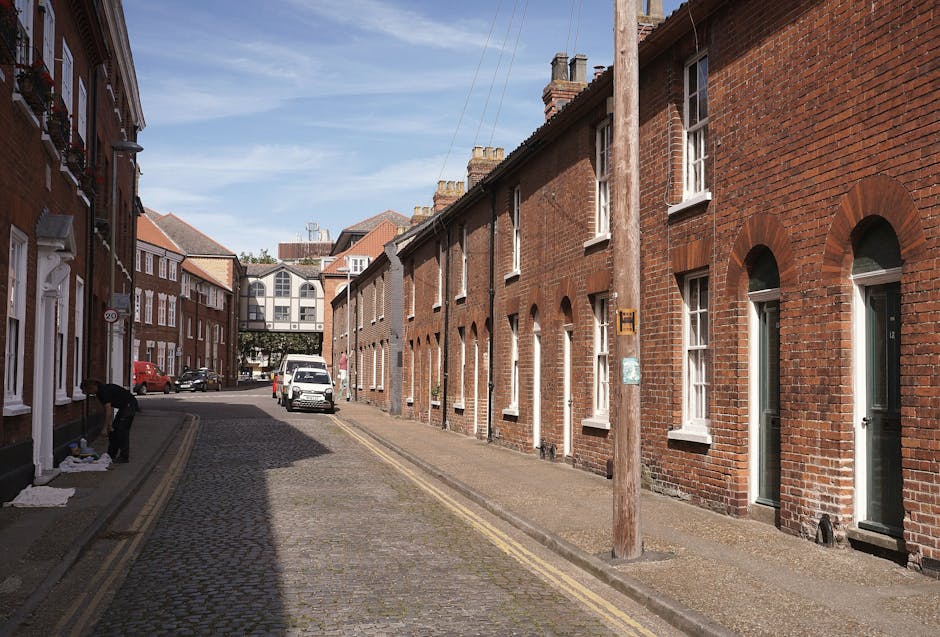
![An outdoor street scene in Guildford High Street featuring traditional brick houses with pitched roofs and multiple chimneys. One building has a white facade and large windows, positioned at the corner of a curved road, which is wide enough to accommodate moving vehicles. The street is lined with a sidewalk on both sides, and classic black lampposts are visible along the pavement. In the distance, a silver car is driving along the road, approaching the intersection near a large, leafy green tree. The scene appears during daylight with overcast skies, providing natural, diffuse lighting. This setting illustrates a typical residential area suitable for house removals or furniture transport, with a focus on the street's spaciousness and the architecture of the buildings, aligning with local moving and packing processes as handled by [COMPANY_NAME].](/pub/blogphoto/guildford-high-street-house-removals-local-parking-tips2.jpg)
Common Mistakes to Avoid
The most common mistakes are surprisingly ordinary. That is what makes them dangerous.
- Assuming there will be a space because there usually is one.
- Booking the van without checking access and then realising the carry route is much longer than expected.
- Loading in the wrong order so the most awkward item ends up buried near the back.
- Ignoring neighbours, deliveries, or shopfronts near the entrance.
- Forgetting the return trip and leaving the van nowhere sensible to wait after the first unload.
- Trying to do too much with too little time because the schedule looked neat on paper.
One mistake deserves extra attention: not measuring the practical distance from van to door. People often focus on where the vehicle can legally stop, but the real issue is how far everyone has to carry the items. Ten metres in a quiet driveway is one thing. Ten metres beside traffic, pedestrians, and a narrow footway is another thing entirely.
If storage becomes part of the solution because access or timing is messy, the option to use storage in Surrey can take pressure off the move and let you split the job into two cleaner stages.
Tools, Resources and Recommendations
You do not need fancy kit to manage parking well, but a few basics help a lot.
- Notebook or phone notes for time windows, bay locations, and backup plans.
- Measuring tape for door widths, furniture size, and awkward access points.
- Printed or digital inventory so you know what should be on the van first.
- Protective materials such as blankets, wraps, and sturdy tape for safe handling.
- Parking awareness from whoever is managing the move on the day. One person should own the plan.
For packing support, the packing and boxes guidance can be useful if you want a more organised start. And if you are comparing moving support levels, removals in Surrey is a sensible place to understand how a fuller service can reduce pressure on moving day.
People who prefer to work with a single point of responsibility often also look at removal services more broadly, especially where access, packing, and transport all need to line up neatly.
Law, Compliance, Standards, or Best Practice
Parking for a house move is one of those areas where common sense, local rules, and courtesy all matter together. You should always use legal parking arrangements, respect any restrictions in place, and avoid blocking access for emergency vehicles, residents, or businesses. On a busy town-centre street, that is not just polite; it is basic good practice.
If you need time-limited loading or unloading, the safest route is to plan for it in advance rather than hoping for a quick stop-and-go arrangement on the day. Councils, controlled parking areas, and local traffic conditions can all affect what is practical. Because these arrangements can vary by location and over time, it is wise to verify details with the relevant local authority or parking operator rather than relying on habit or hearsay.
From a removals best-practice point of view, the aim is simple: keep the move safe, lawful, and considerate. That includes safe lifting, clear walkways, and sensible vehicle positioning. If you are booking professional help, it is also worth checking that they carry appropriate insurance and work to clear safety procedures. The company's insurance and safety information is the kind of thing you should read before moving day, not after.
Where a move involves valuable or specialist items, such as a piano or delicate furniture, make sure the handling plan reflects the item's weight, shape, and sensitivity. That is standard best practice, not over-caution.
Options, Methods, or Comparison Table
Different parking strategies suit different kinds of Guildford High Street moves. Here is a simple comparison to help you think it through.
| Approach | Best for | Strengths | Trade-offs |
|---|---|---|---|
| Closest legal kerbside stop | Short, straightforward moves | Fast loading, minimal carrying | Often hard to secure on busy streets |
| Slightly further bay with clear route | Busy High Street locations | More realistic, less stressful to organise | Extra walking distance |
| Smaller vehicle access plan | Tight streets and light loads | Easier manoeuvring | May require more trips |
| Split-load or staged move | Complex, time-pressured relocations | Flexible and practical | Needs tighter coordination |
If the move is relatively simple, a leaner option such as man and van in Surrey may be enough. For larger households, a fuller house removals approach is usually easier because the packing, carrying, and parking plan can be managed as one job.
There is no single perfect method. The best one is the one that fits your street, your property, and your timing. That sounds obvious, but honestly, people forget it all the time.
Case Study or Real-World Example
Imagine a family moving out of a flat just off Guildford High Street on a Saturday morning. The property is above a shop, the stairwell is narrow, and the nearest bay is often occupied by short-stay traffic. The initial instinct is to try for the closest possible stop, because it feels efficient.
Instead, they do a quick route check the day before and identify a slightly further legal space with a cleaner approach to the building entrance. It means a longer carry by maybe a minute or two per trip, but it also means no blocking, no last-second re-parking, and no standing in the road while deciding what to do next. The items are loaded in a sensible sequence: boxes first, beds dismantled and protected, then the largest furniture last.
The result? Fewer delays, calmer pacing, and less risk of scratching door frames or catching furniture on corners. The move still takes effort, naturally. Moving always does. But the day feels controlled rather than chaotic. That is the real win.
For families with children or extra luggage, it can also be useful to think about temporary holding space or staged packing. If you are in that stage of life where every cupboard seems to contain something unexpectedly heavy, you are not alone.
Practical Checklist
Use this simple checklist before moving day.
- Confirm the exact property access point.
- Check nearby parking options and likely restrictions.
- Identify a backup stopping place.
- Measure bulky items and door widths if needed.
- Pack items in loading order.
- Protect fragile furniture and floors.
- Tell neighbours if access may be briefly affected.
- Keep keys, paperwork, and essentials easy to reach.
- Build in a little extra time for parking or a short delay.
- Make sure the team knows who is directing the move on the day.
Quick rule of thumb: if the parking plan feels vague, the move will probably feel vague too. Tighten the plan early and the rest gets easier.
Conclusion
Guildford High Street house removals local parking tips are not really about parking alone. They are about creating a move that stays calm, legal, efficient, and considerate from first box to final key handover. Once you understand how much the vehicle position affects lifting, timing, and safety, the whole process becomes clearer.
The best approach is simple: check access, choose the right stopping point, pack with the loading route in mind, and leave yourself a small buffer. That is especially true in a busy town-centre setting where a tiny delay can snowball. With the right plan, even a tricky High Street move can feel very manageable. Not effortless, no. But manageable, and that matters more.
If you want help planning the move itself, comparing service levels, or working out which approach suits your property, take a look at the wider options and get organised early. A little preparation now can save you a very long day later.
Get a free quote today and see how much you can save.